

Orange is the New Black: F1’s Unsung Heroes
- Snehanshn Hazarika

- Jul 9, 2020
- 4 min read

“Volunteers are the unsung heroes of motorsport. Without them, quite simply, we would not be able to go racing,” said Jean Todt, FIA President (F1’s governing & sanctioning body).
Amid the roar of the engines, the screech of the tires, and the cacophony of the crowd, there is an army of volunteers who diligently and silently go about doing their work. Without the men and women who freely give their time to flag-waving and vehicle recovery in everything from blazing sunshine to pouring rain, the Formula One circus, as we know it, would grind to a standstill - a fact they relish.
Their responsibilities and hence their necessity
Formula 1 marshals contribute to enjoyable, efficient, and safer racing. They are responsible for the safety of competitors and are stationed at various points of danger around the circuit. The marshals - varying from track, fire, flag, and recovery - work tirelessly during the racing weekend to ensure the race goes through smoothly. They also work in pit and paddock areas, assembly areas, and race control, doing everything to see the event runs efficiently.
"All the big names have ended up in the back of the truck," recalled Tripkovic, a veteran marshal at the Silverstone circuit. "The Sennas -- Ayrton and Bruno -- Alain Prost and Nigel Mansell. I've brought in grandsons of drivers who had broken down in the 1960s!!”
The marshals pictured below are divided into teams that are spread across race administration support, race control support, sector marshals, flag marshals, communications marshals, track marshals, pit lane and grid marshals, scrutineers, fire and rescue, spectator control, vehicle recovery, timing, support paddock, information, boundary riders, equipment control, historic garage, water and medical. Phewww!!! That's a lot and I shouldn't have tried to read it all back in one breath.

Selfless duty while in the constant proximity of danger
The track marshals are usually first on the scene when there is a crash during a Formula 1 race or during practice sessions and qualifying. Being just off the race track, they are much closer than any spectator. This is the “can’t sit down” part. They have to be prepared to run at any time, either to avoid the oncoming car or to rush to someone’s aid. There is no sitting for corner marshals, no matter how long the race. In three days of racing that runs pretty much sunup to sundown, that’s a lot of standing.
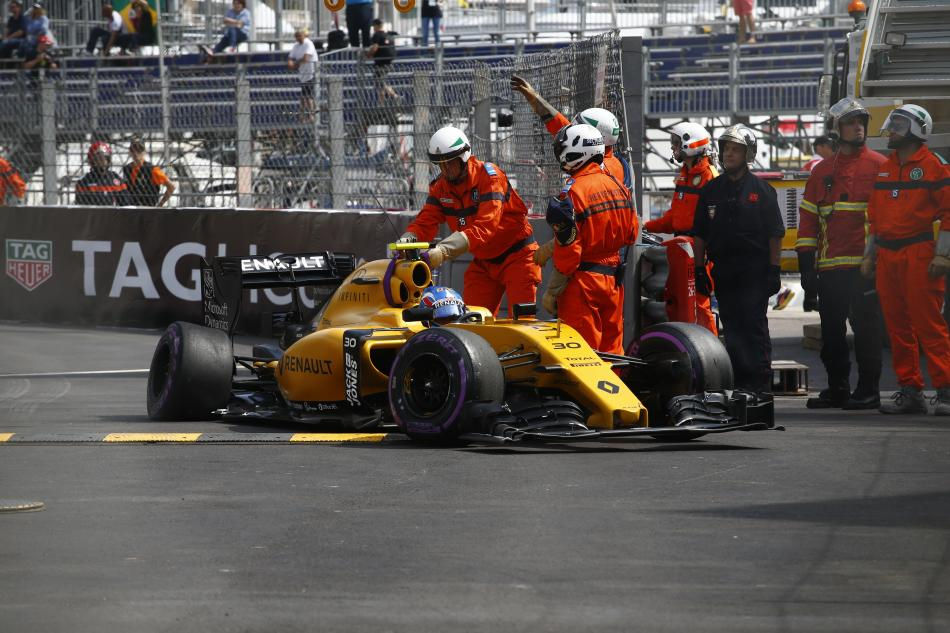
A marshal’s proximity to the action also puts them at great risk and a number of them have lost their lives. One of the main causes is being hit by flying debris, particularly wheels which can become lethal missiles after a crash. This is particularly dangerous in the case of street circuits (Monaco, Singapore, Baku). The most dangerous part of the job, one done very carefully and with a lot of forethought, is clearing debris off the track. Debris can come from several sources, the most common being the aerodynamic appendages of the race cars. When the cars hit each other, razor-sharp bits of expensive carbon fiber fly everywhere, and if it lands on the race track, they have to go pick it up. example- The 2016 Monaco Grand Prix was the first-ever race start at Monaco under safety car conditions, there were four virtual safety car periods to deal with the more serious instances of debris and damaged cars (pictured below). The unforgiving barriers and tricky conditions meant there was a regular need to clear pieces of carbon fiber from the circuit, and that this was done in a safe and timely manner is a testament to the professionalism of all involved.


The (no) Money Factor
While the drivers hog all the limelight in the glamorous sport, the marshals, who put their life on the line for a job hardly get a mention. While Mercedes driver Lewis Hamilton is F1's highest earner, reputedly commanding an annual salary of around $50m, the marshals on the other hand are unpaid for the work that they do.
“But if you aren’t getting paid for doing such an important job, so why do you even do it?” is a question you might be wanting to ask a marshal if you happen to meet one. A veteran marshal spoke about this once, he was adamant that marshals shouldn't get paid. His reasoning was that - once it is paid, you get people turning up for the money. It's no good having people with that sort of attitude, when other marshals, fans, drivers, and indeed their own lives are at risk. Moreover, they get to watch the race for free and be right up next to the action. And they really care for the safety of the drivers, so much so that they feel the need to be there to support the drivers should the need arise.
My take on this
After hearing this, I think it is appropriate to say- when everyone who is there is there for free, keeping vigilant is seen as a small price to pay for the best seats in the house. They are the closest people to watch the drivers zooming their machines at around 350 kmph and rescue them in case of an accident. The action starts when they raise the green flag and ends with their waving of the chequered flag.
To me, it looks like there are enough incentives in this job that lure people from across the world and all walks of life. Being a marshal is probably the best way for an ardent F1 fan to be associated with the sport.


Comments